
Washington Parish Criminal Court Records
A criminal court record is the court case file opened and maintained once a prosecution is filed in court. In Washington Parish, the Clerk of Court is the repository for criminal proceedings, while the 22nd Judicial District Court is the district-level trial court for felony and other district criminal matters. Bogalusa City Court can handle local city criminal and traffic matters. The record source depends on the court named in the citation, warrant, bond paper, bill of information, indictment, or court notice.
The formal criminal case file should not be confused with a jail roster or arrest record. The sheriff may have booking, custody, accident, criminal-record, or corrections information. The District Attorney decides whether to prosecute and may file a bill of information, seek an indictment, amend charges, refuse charges, divert a case, make a plea offer, or dismiss. The court record then tracks the prosecution through court minutes, hearings, orders, pleas, trial, disposition, and sentence. For a closer look at the charge-filing path, use the Washington Parish arrest records and court charges page.
Search Washington Parish Criminal Records
The main online case-file path is the Washington Parish Clerk eSearch portal. The public sign-in page confirms that criminal images begin 7/1/2015 and that eSearch is account and subscription based for index and image access. It does not show full criminal search fields before login. For older criminal cases, certified copies, sealed matters, or unclear case numbers, contact the Clerk. For court dates, use the 22nd JDC calendar and division contacts rather than assuming eSearch is the scheduling source.
- Check whether the matter is district court, Bogalusa City Court, or another lower court named on the paperwork.
- Use Clerk eSearch for online criminal images when the case date falls within the online criminal image range.
- Use the 22nd JDC court calendar for hearing dates, duty judge schedules, felony jury weeks, and trial-week patterns.
- Request the full file or certified copies from the Clerk when an online index does not provide the needed document.
- For defense or charging questions, contact counsel, the District Attorney, or the public defender as appropriate, not the Clerk.
Statewide systems are different from the parish court file. Louisiana DOC information covers sentenced imprisoned persons, VINE handles custody notifications, and State Police sex-offender registry records are separate from the Washington Parish criminal case file.
Washington Parish Criminal Case Flow
Criminal court records grow as a case moves. After arrest or citation, a first court appearance may address counsel and bail. La. C.Cr.P. art. 230.1 requires an arrested person to be brought before a judge within 72 hours, excluding weekends and legal holidays, for counsel appointment and possible bail review. The District Attorney then controls the formal prosecution path, and the Clerk keeps the resulting filings and minutes.
Case flow: Charges Filed › Arraignment › Pretrial / Motions › Plea or Trial › Disposition › Sentencing
| Stage | What Happens |
|---|---|
| Charges filed | The DA files or pursues a complaint, bill of information, or indictment, depending on the case. |
| Arraignment | The defendant is called to answer the charge, and a plea is entered or set. |
| Pretrial / motions | The court handles discovery disputes, suppression motions, continuances, bond issues, and other requests. |
| Plea or trial | The case resolves by plea, bench trial, jury trial, dismissal, or another disposition. |
| Sentencing | The court imposes jail, prison, probation, fine, cost, restitution, or other terms after conviction. |
The first-appearance statute is one of the criminal procedure sources assigned to this page.
La. C.Cr.P. art. 230.1 describes the 72-hour appearance rule after arrest, excluding weekends and legal holidays.
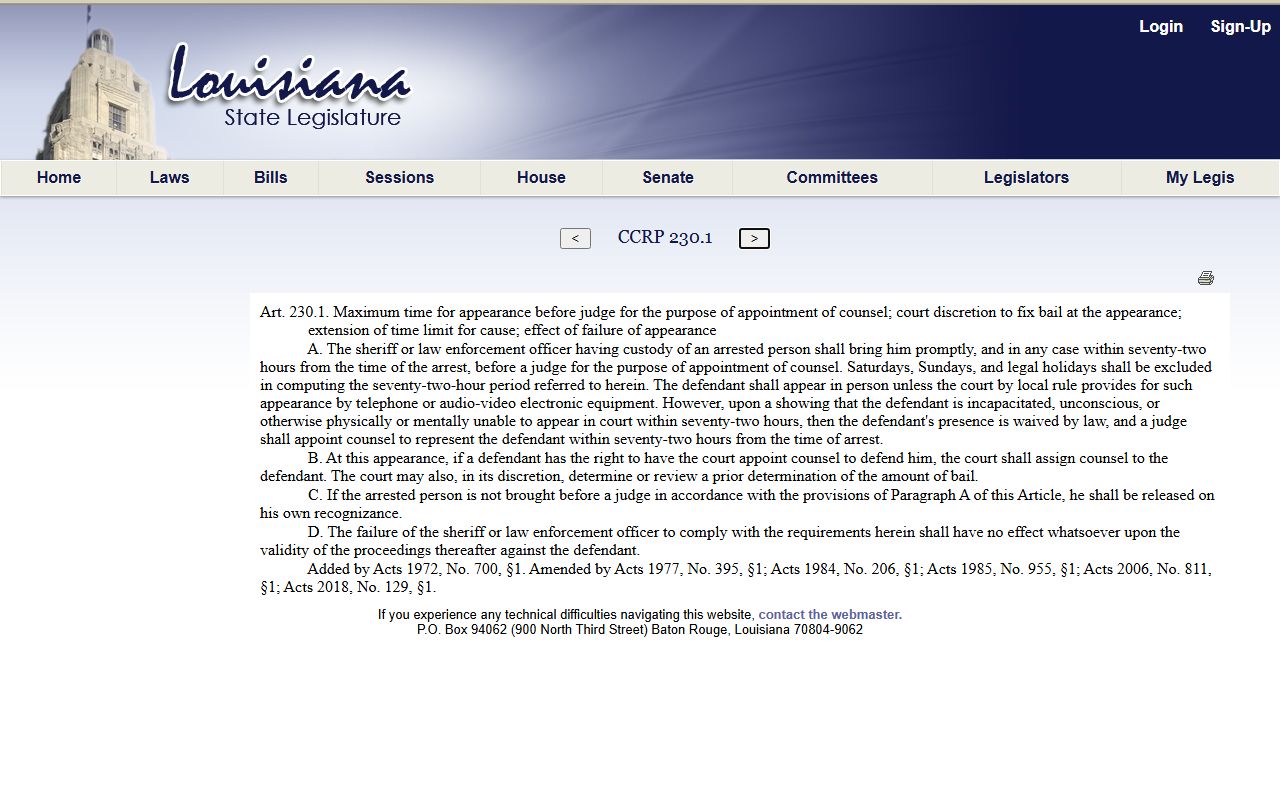
That rule helps explain why early criminal court records may show bail review, counsel appointment, or initial court minutes soon after booking.
What Washington Parish Criminal Records Show
A Washington Parish criminal court record can include both high-level case data and filed documents. The public eSearch page confirms criminal image coverage from 7/1/2015 forward, but a full sample record was not visible without login. The field list below uses the official research inventory for criminal court records, Louisiana district-court practice, and the Clerk's stated repository duties.
| Field | What It Shows |
|---|---|
| Case number | The Clerk-assigned criminal docket or case identifier, when available from the file or notice. |
| Defendant | The person accused in the criminal case, with identifiers as allowed by public-access rules. |
| Court and division | The 22nd JDC division or lower court that handles the prosecution. |
| Charges | The offense names, statutes, severity, amendments, reductions, or dismissed counts filed in court. |
| Docket and minutes | Arraignment, motion hearings, trial settings, continuances, warrants, pleas, sentencing, and appeal notices. |
| Disposition | The outcome, such as guilty plea, verdict, dismissal, acquittal, nolle prosequi, or other resolution. |
| Sentence | Jail, prison, probation, fine, restitution, costs, suspended sentence, or special conditions if imposed and filed. |
Charges vs Convictions
Being charged is not the same as being convicted. A Washington Parish criminal court record can show accusations that were later amended, reduced, dropped, dismissed, refused, or resolved by acquittal. The charge list is still part of the case history unless the record is sealed, expunged, or otherwise restricted. Read the final disposition before treating a criminal court record as proof of guilt.
| Comparison Point | Charge | Conviction |
|---|---|---|
| Meaning | An accusation filed or pursued in court. | A guilty plea, guilty verdict, or other finding of guilt. |
| Timing | Appears early and may change during prosecution. | Appears only after plea, verdict, or qualifying adjudication. |
| Record reading | Check status, amendments, and dismissal language. | Check sentence, probation terms, fines, and final judgment. |
| Public limits | May be public, but pending investigative records and restricted details can be withheld. | May be public unless sealed, expunged, juvenile, or otherwise confidential. |
The law-enforcement records source is central to this distinction.
La. R.S. 44:3 limits certain investigative and prosecutive records while treating booking records and bills of information differently.
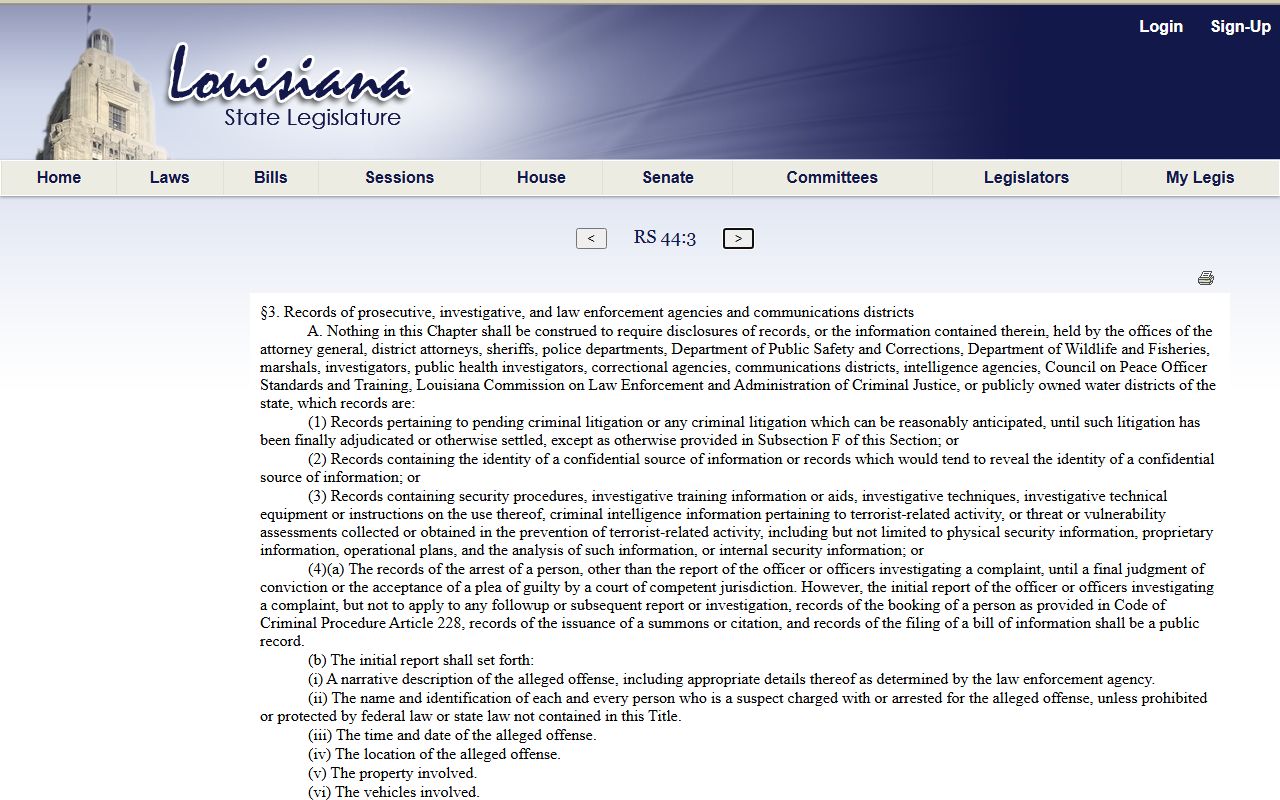
This law helps separate public court filings from pending investigative material that may not be released.
Read Washington Parish Dispositions
The disposition is the outcome of a charge or case. A criminal record may show guilty, not guilty, dismissed, nolle prosequi, acquitted, amended, reduced, deferred, probation, or sentence imposed. "Nolle prosequi" generally means the prosecutor declined to continue that charge. "Dismissed with prejudice" means the same claim or charge cannot be refiled in the same way, while "dismissed without prejudice" leaves room for refiling where allowed. A sentence can include jail or prison time, suspended time, probation, fines, costs, restitution, and conditions.
Washington Parish criminal records also need context from the office roles. The District Attorney files and prosecutes charges. The public defender may represent eligible defendants, but it is not a record custodian. The Clerk keeps the filed court record. WPSO handles custody and booking. These offices are close together in Franklinton, but they answer different questions.
The District Attorney source shows the prosecution office tied to 22nd JDC criminal cases.
The J. Collin Sims District Attorney site identifies the 22nd Judicial District Attorney office serving Washington Parish.
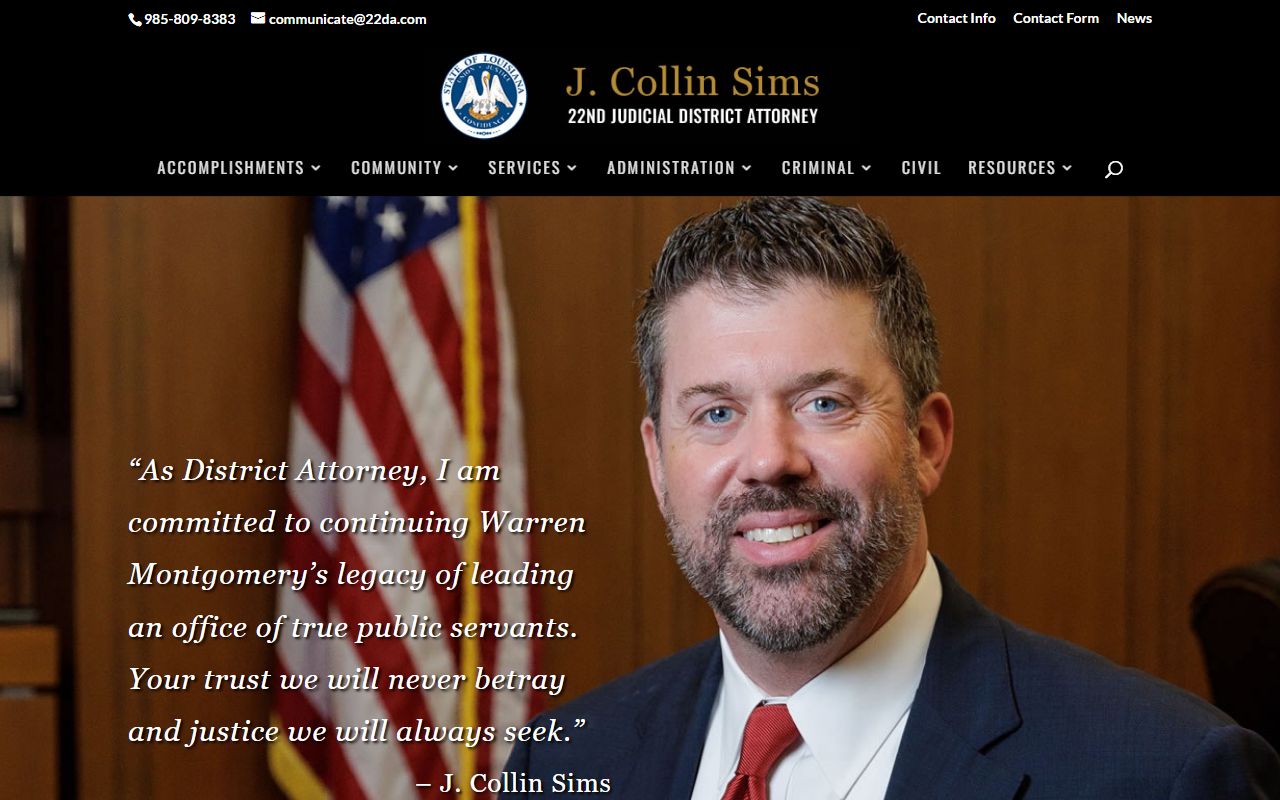
The DA source is relevant because prosecutors control the formal charge path before a criminal court record reaches final disposition.
Sealed vs Expunged Criminal Records
Sealing and expungement both restrict public access, but they are not the same thing. Louisiana expungement removes qualifying records from public access while preserving access for listed law-enforcement, criminal justice, court, licensing, subject, counsel, and other exceptions. It does not mean every trace is destroyed. Juvenile records and some child-related matters are confidential under separate rules. A person should not assume that a dismissed or old charge disappears from every system without a court order.
| Comparison Point | Sealed | Expunged |
|---|---|---|
| Public visibility | Restricted from ordinary public view by law or court order. | Removed from public access if the court grants qualifying relief. |
| Record existence | The file still exists under restricted access. | The record is not destroyed under Louisiana expungement law. |
| Who may still access | Depends on the order, statute, and role of the requester. | Listed law-enforcement, court, licensing, subject, counsel, and other statutory users may have access. |
| How it starts | By statute, court order, juvenile law, or case-specific confidentiality rule. | By filing an expungement request and obtaining a court order where eligible. |
The expungement statute source confirms that qualifying records are removed from public access.
La. C.Cr.P. art. 971 states the public-access effect of expungement under Louisiana criminal procedure.
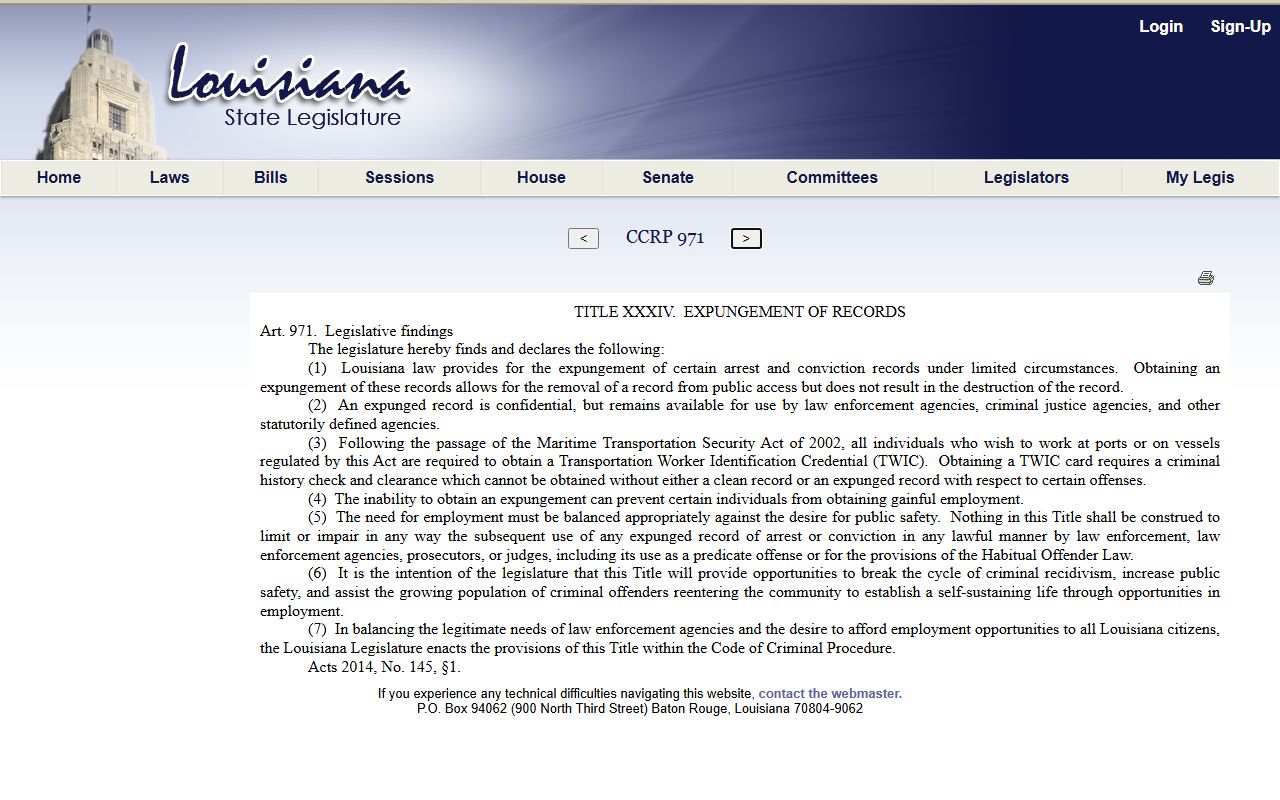
That source supports treating expungement as a public-access limit, not a promise that all agencies lose every record.
Public Access to Washington Parish Criminal Records
Criminal court files are generally public when they are court records and no confidentiality rule applies. La. R.S. 44:31 gives adults a general right to inspect and copy public records. La. R.S. 44:3 restricts pending investigative and prosecutive records, victim identifying details, some body-camera material, and other protected information. Louisiana Children's Code art. 412 keeps most juvenile court records confidential except where authorized.
Key point: The Clerk may release a public court filing while WPSO or prosecutors withhold an investigative file tied to the same event.
Expunged-record confidentiality is also defined by Louisiana statute.
La. C.Cr.P. art. 973 explains the confidentiality and exception structure for expunged criminal records.
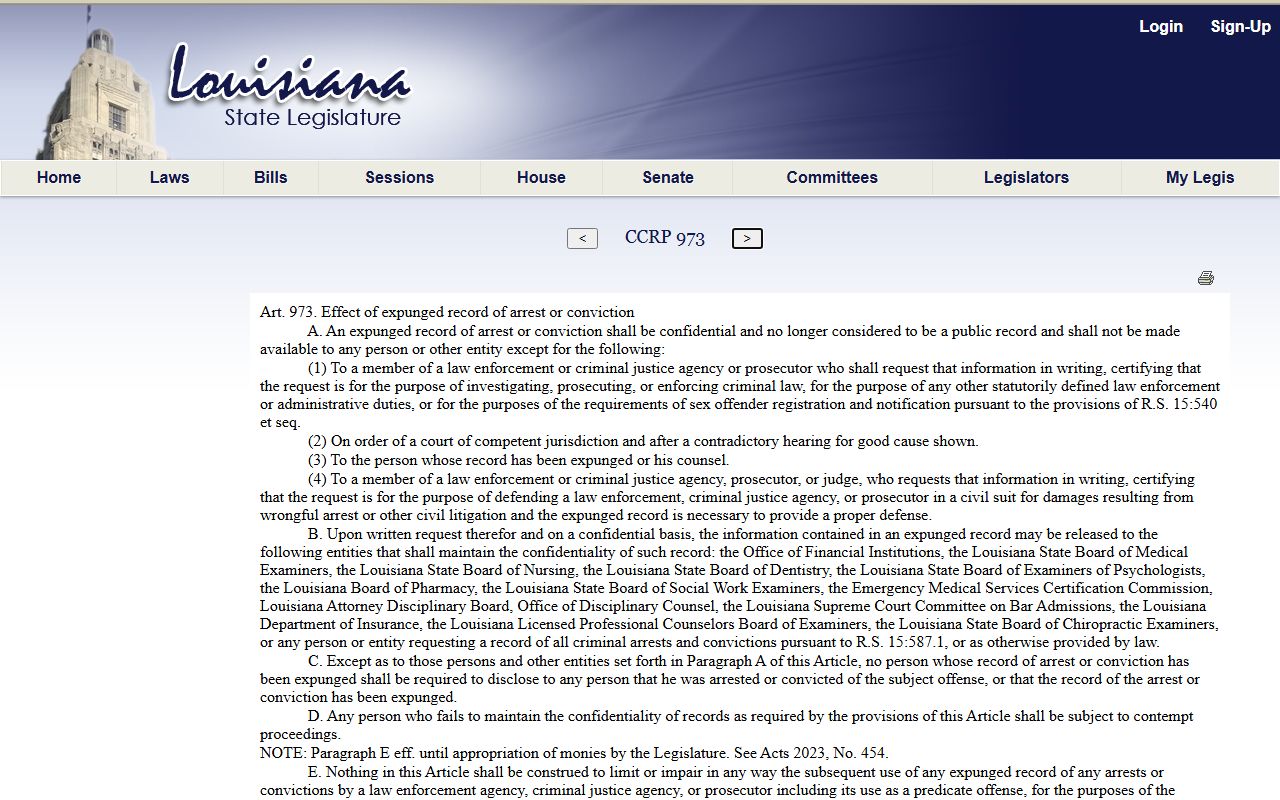
This source is important when a criminal case appears missing from public search results after an expungement order.
Washington Parish Criminal Record Contacts
Use the Clerk for the filed criminal court record. Use the 22nd JDC calendar for court dates. Use the DA for prosecution and charging decisions where proper. Use the public defender for eligible defense representation. Use WPSO for custody, jail, booking, accident reports, sheriff records, and inmate roster questions. A single criminal event can touch all of those offices, but each office is a different source.
Washington Parish Clerk of Court
908-B Washington St.
Franklinton, LA 70438
985-839-4663
Criminal fax 985-839-7271
District 22 Public Defender
919A Washington Street
Franklinton, LA 70438
985-839-2245
Washington Parish felony public defender office.
The public defender source confirms the local defense office for District 22.
The Louisiana Office of State Public Defender District 22 page lists the St. Tammany and Washington Parish defense structure.
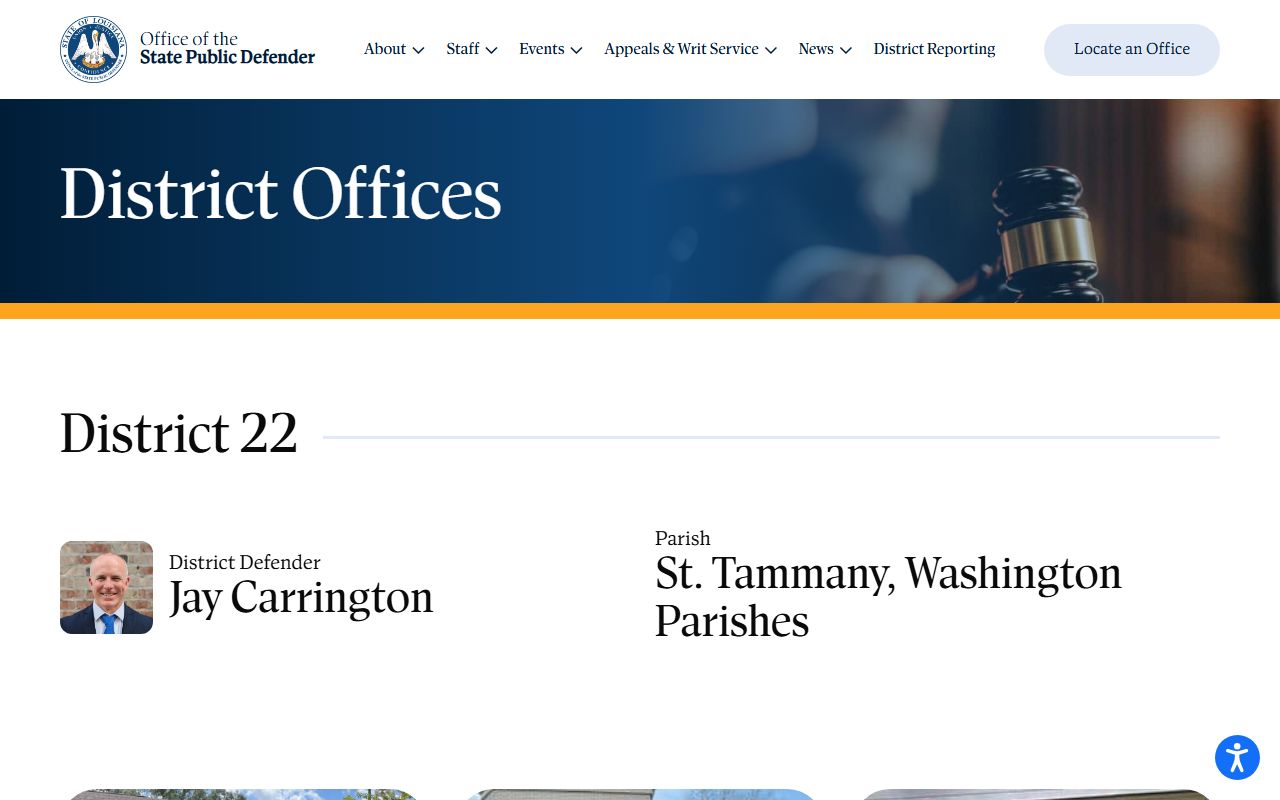
The public defender listing is useful for case participants, but it is not a substitute for a Clerk record request.