
Washington Parish Arrest Records and Court Charges
Arrest records begin with law enforcement and jail intake. In Washington Parish, the Sheriff's Office is the local custody and law-enforcement hub, with the jail and Records Division reached through WPSO channels. Booking information may show the person arrested, custody status, agency, date, and booking charge if made public by the sheriff or roster. Formal court charges are different. They are the accusation the prosecutor files or pursues in court and that the Clerk then tracks as part of the criminal case file.
That split is the core issue for court charges after arrest. WPSO may show booking or custody information, but the District Attorney decides prosecution through a bill of information, indictment, amendment, refusal, diversion, plea, or dismissal. The Clerk keeps the filed court record once a case exists. For jail roster and custody details, use the inmate records page. For the full court case, plea, disposition, and sentence, use Washington Parish criminal court records.
The sheriff's criminal-records source is one official starting point for the law-enforcement side.
The Washington Parish Sheriff's Office criminal-records page describes sheriff records and the Washington Parish Jail as a full-service jail.

That sheriff source helps separate booking and jail information from the later court charge record.
Find Washington Parish Arrest Records
Start by identifying whether the need is custody, booking, court charges, or final disposition. WPSO provides sheriff, corrections, civil, patrol, criminal records, accident reports, inmate search, and sex-offender navigation from its official site. The Clerk's eSearch portal covers criminal images from 7/1/2015, subject to login and subscription. The 22nd JDC court calendar helps confirm hearing timing. Bogalusa City Court should be checked for city traffic and city criminal matters.
- For current custody or booking context, check WPSO inmate and records channels or call 985-839-3434.
- For formal court charges, search the Clerk eSearch portal if the criminal image date range may cover the case.
- For a charge status, read the court file or docket entry to see whether the count is pending, amended, reduced, dismissed, or disposed.
- For a court date, use the 22nd JDC calendar or the lower court named on the citation or notice.
- For a certified charge or disposition record, request the filed record from the Clerk or the court that handled the case.
Do not treat statewide custody, sex-offender, or driver-record tools as substitutes for the Washington Parish court charge record. Those systems serve different purposes and may not show the prosecutor's final charging decision.
Charges After Arrest Documents
The arrest happens first, but the court charge record begins when a charging document is filed or accepted in court. Louisiana criminal cases often involve a bill of information or indictment, with complaints and citations appearing in some lower-level or initiating contexts. The research source identifies the DA as the charging authority for formal prosecution in the 22nd Judicial District. The specific document type controls what appears in the court record and how the case moves forward.
| Document | Who Files or Initiates It | What It Does | Record Caution |
|---|---|---|---|
| Complaint | Officer, complainant, or prosecutor depending on context | Starts or supports an accusation in a lower-level or early case setting. | May not be the final prosecuting charge. |
| Bill of information | District Attorney | Formally charges many Louisiana criminal cases without a grand-jury indictment. | Read amendments and dismissal entries before relying on the original count. |
| Indictment | Grand jury | Formally charges a case through grand-jury action. | Common in serious felony matters and can be followed by plea or trial events. |
The District Attorney source confirms the Washington Parish prosecution office tied to formal charges.
The Louisiana District Attorneys Association prosecutor roster lists J. Collin Sims for the 22nd Judicial District and Washington Parish contact information.
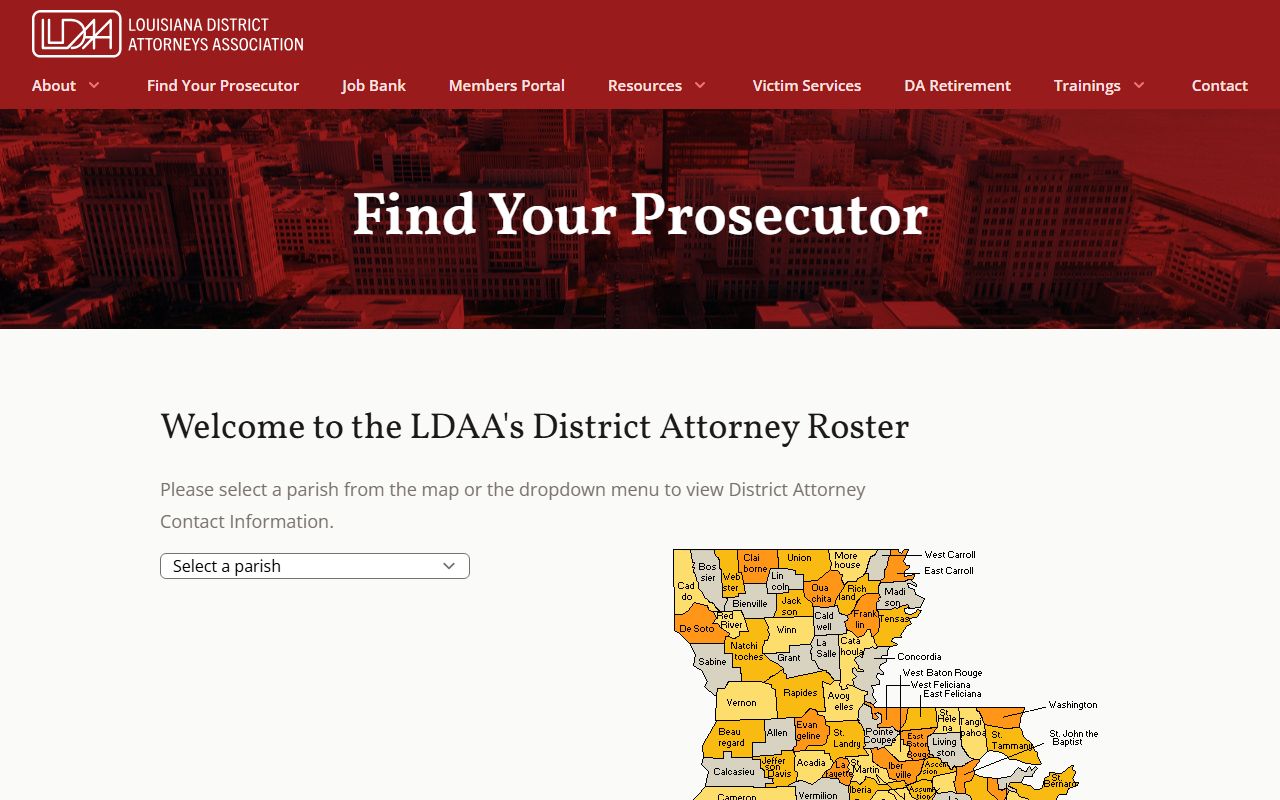
The DA roster matters because formal charges are a prosecution decision, not just a sheriff booking label.
Washington Parish Charge Status
Charges can change after arrest. One arrest may produce multiple counts, and some counts may move forward while others are reduced or dismissed. A court charge record should be read count by count. The booking charge may differ from the filed charge, and the filed charge may differ from the final conviction. When the case is still pending, status words can be more important than the original offense label.
| Status | What It Means | How to Read It |
|---|---|---|
| Pending | The charge is still open in court. | Check the next docket date and whether bond, motions, or plea talks are pending. |
| Amended | The prosecutor changed the charge language, statute, severity, or count. | Compare the original filing to the amended charge and final disposition. |
| Reduced | The charge moved to a lower severity or different offense. | Do not report the original charge as the final outcome without the disposition. |
| Dismissed | The court or prosecutor ended that charge. | Check whether dismissal was with prejudice, without prejudice, or tied to another plea. |
| Nolle prosequi | The prosecutor declined to continue that charge. | It is not the same as a conviction and may still remain in the case history unless restricted. |
| Disposed | The charge has reached an outcome. | Read the plea, verdict, sentence, and any probation or cost terms. |
Charges vs Convictions
A charge is an accusation. A conviction is an outcome based on a guilty plea, guilty verdict, or other finding of guilt. Washington Parish arrest records may point to booking charges that never become filed charges. Court charge records may show filed counts that are later amended, reduced, or dismissed. The final criminal court record must be checked before using a charge as proof of conviction.
| Comparison Point | Charge | Conviction |
|---|---|---|
| Meaning | Formal accusation or booking allegation. | Finding or plea of guilt. |
| Where it appears | Booking, bill of information, indictment, complaint, docket, or minutes. | Disposition, plea minutes, verdict, sentence, or judgment. |
| Can change? | Yes. It may be amended, reduced, dropped, or dismissed. | It can be appealed, set aside, expunged from public access, or otherwise affected by later orders. |
| How to verify | Review the charging document and current status. | Review the final disposition and sentence in the criminal court record. |
Note: A Washington Parish booking charge should not be treated as a conviction without the court disposition.
Public Access to Charge Records
Louisiana law treats court filings and law-enforcement records differently. La. R.S. 44:3 can restrict pending investigative and prosecutive records, confidential sources, victim identifying information, and privacy-sensitive body-camera recordings. At the same time, the research notes that booking records, summons or citation records, and bills of information receive different treatment from full investigative files. That means a filed court charge may be public while related police reports are withheld.
La. R.S. 44:31 provides the general public-records access rule, and La. R.S. 44:32 covers custodian duties and written reasons when access is questioned. Juvenile cases, child-related matters, sealed cases, expunged records, victim identity details, and pending investigations may be limited. Ask the proper custodian because WPSO, the DA, the Clerk, and the court do not hold the same records.
Bond and First Appearance
After an arrest, the custody path can produce jail, bond, and first-appearance records before a full prosecution is complete. La. C.Cr.P. art. 230.1 requires an arrested person to be brought before a judge within 72 hours, excluding weekends and legal holidays, for counsel appointment and possible bail review. That early court event may appear in minutes or docket records. It does not decide guilt.
Sheriff Jason Smith is the current Washington Parish Sheriff, and WPSO lists the main phone as 985-839-3434. WPSO's official pages point to corrections, criminal records, accident reports, inmate search, sex offenders, and court fines or tickets. Those sheriff services may help with booking or custody questions, while the Clerk and court record show filed charges and later outcomes.
The sheriff biography source identifies the current Washington Parish Sheriff.
The WPSO Sheriff Jason Smith biography states that Jason Smith was elected Sheriff of Washington Parish in 2023.

The sheriff source is relevant to arrest and booking records, but it does not replace the District Attorney's filed court charges.
Sealed and Expunged Charge Records
Charge records may be hidden from public view when a case is juvenile, sealed, expunged, or otherwise confidential. La. C.Cr.P. art. 971 states that expungement removes qualifying records from public access, and La. C.Cr.P. art. 973 explains confidentiality and exceptions for expunged records. The research stresses that expungement is not automatic deletion and does not destroy the record for every authorized user.
| Comparison Point | Sealed | Expunged |
|---|---|---|
| Public access | Blocked or limited by law or court order. | Removed from public access after a qualifying court order. |
| Record status | The charge record still exists under restricted access. | The record is not destroyed for all statutory purposes. |
| Who may access | Depends on the statute, order, case type, and requester role. | Listed law-enforcement, court, licensing, subject, counsel, and other exceptions may apply. |
| How to verify | Ask the court or Clerk about access authority. | Review the expungement order or ask the Clerk about the case-specific public-access status. |
Washington Parish Charge Record Contacts
Use the right office for the right record. WPSO handles arrest, booking, jail, accident report, sheriff records, fines and tickets, and inmate roster questions. The District Attorney files and prosecutes charges. The Clerk keeps the filed court record. The public defender represents eligible defendants but is not a records custodian. Bogalusa City Court handles city traffic and city criminal matters on its own court path.
Washington Parish Sheriff's Office
Courthouse Business Office
908 Washington St.
Franklinton, LA 70438
985-839-3434
District Attorney, Washington Parish
905 Pearl Street
Franklinton, LA 70438
985-839-6711
22nd Judicial District Attorney
If the issue is the final court outcome, request the criminal court file from the Clerk. If the issue is a live warrant or custody status, contact WPSO or the issuing court.